
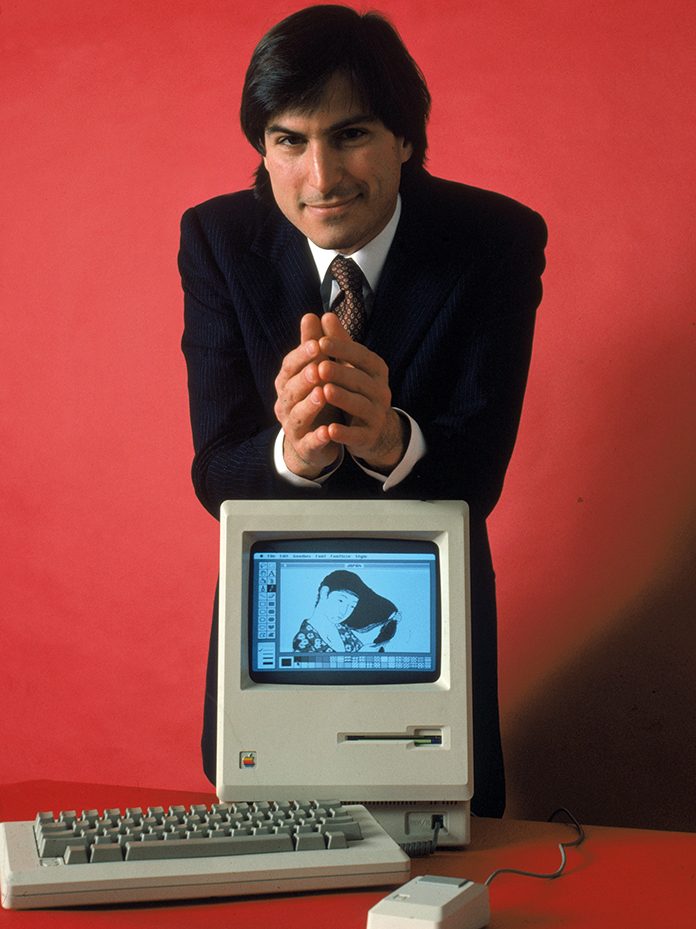
When Steve Jobs died of pancreatic cancer in October 2011, he was only 56. The world mourned the passing of a modern Leonardo da Vinci. Having co-founded Apple Computer in his parents’ garage in 1976, Jobs was forced out of the company in 1985, to then return in 1997 to rescue it from bankruptcy. He then turned Apple into one of the world’s most valuable businesses through innovative technology, such as iMac computers, iPod music devices and, of course, the iPhone.
Jobs was widely thought of as irreplaceable. In 2011, a top executive at rival Samsung, the South Korean consumer electronics giant, arrived in my office at the Financial Times and declared flatly that Apple was doomed. He also said that Tim Cook, the soft-spoken operations guy from Alabama who succeeded Jobs as CEO, was a pale imitation. The best Apple engineers would vote with their feet. At the time, Apple was valued around $145bn.
Fifteen years on, Cook is still in charge and Apple is valued around $3.9trn. It roughly generates $400bn a year in revenue – more than Meta, Netflix and Intel combined. Today, approximately 27 per cent of the global population uses Apple products, which equates to 2.2 billion people. In 2026, Apple will likely sell 220 million iPhones, bringing in $1m every 90 seconds.
Numbers cannot capture the magnitude of the achievement. Apple’s story is about exquisite design, relentless innovation, and unconventional management. It is also about the transformational power of technology. The smartphone has given its users a voice, led to disruption in media and politics across the globe, and even helped inspire new vocabulary, such as “phone addict” and “selfie”.

The son of a Syrian immigrant father and later adopted by Americans as a child, Jobs, in the words of David Pogue, left behind one of the most successful, influential, controversial, resented and loved companies in human history. Pogue’s book, Apple, which covers the first 50 years of the company’s existence, “is about how Apple changed not only the devices we use, but us; how we communicate, consume and create, in complicated ways we’re still trying to understand”.
Pogue, an award-winning TV broadcaster, has spent much of his career writing about Apple products – and it shows. His lavishly illustrated tome will delight the geeks and nerds. No Apple product is left unexamined. Readers can study the duds (including the Lisa personal computer and the high-price, high-weight Apple III) as well as the knock-outs such as the iPod, the iPad and the iPhone (and all their various iterations).
Pogue discusses at length the software engineers and designers who helped propel Apple into a multi-trillion-dollar company. Some, like uber-designer Jony Ive, are already well known, but there are many who have remained anonymous. One reason is that Apple is notoriously secretive. (Pogue had access to executives and former executives, but says Apple did not see a copy of the book before it was published.)
Apple’s little platoons have long been overshadowed by Jobs, the passionate, volatile and petty prodigy immortalised in Walter Isaacson’s eponymous 2011 biography. Pogue has therefore done us all a service. Inspirational leadership is one thing, but teamwork based on Jobs’s brand of “high-intensity collaboration”, as well as the odd ballsy executive saying “no” to the boss, helped to turn Apple into a world-beater.
Apple has generated many Harvard Business School case studies and plenty of good books, from Insanely Great, Steven Levy’s account of the Macintosh PC, to Return to the Little Kingdom, the venture capitalist billionaire Michael Moritz’s story of Steve Jobs’s improbable comeback. Focusing on products and people is one way to avoid treading over familiar ground, but Pogue’s granular approach comes at the expense of an overarching narrative.
Apple’s genesis and evolution coincided with a period of extraordinary technological advance, powered first by the microchip, then the internet, the mobile internet, and now artificial intelligence. This period has created wealth on an unimaginable scale, especially for tech founders and the venture capital ecosystem in Silicon Valley. It has led to a concentration of power around the “Magnificent Seven”: Amazon, Apple, Meta, Alphabet (which owns Google), Microsoft, Tesla and Nvidia.
Apple’s dominance reflects a 25-year-long process of hyper-globalisation in which money, technologies and ideas have flowed freely. But this period is now fading amid economic nationalism driven, in part, by a technological arms race between the US and China, and a global tariff offensive led by Donald Trump. The world in which Apple once thrived no longer exists.
Pogue’s engagement with these themes is glancing, though he does address one more rigorously: the outsourcing of Apple’s hardware manufacturing to China via Taiwan’s Foxconn, the world’s largest contract electronics maker. This was a brilliant initiative led by Cook after the company’s near-death experience in 1997 when costs and product lines were out of control, and engineers were leaving in droves.
Cook, who once called inventory “fundamentally evil”, saw Asian-based manufacturing as a way to wrest back competitive advantage. Foxconn’s reliability and speed were freakishly good. In the early 2000s, Apple closed down factories in Mexico, Wales, Singapore, South Korea and Taiwan. Then Cook and his operations team went all-in on China.
This shift raises the question of Apple’s supply-chain dependency, a theme similarly explored in Patrick McGee’s 2025 book, Apple in China. Pogue discusses it over a mere two pages. Since 2017, Apple has sought to diversify its manufacturing operation, moving to India and Vietnam. Earlier this year, Cook, in a bid to placate Trump, presented the president with an Apple-designed trophy in the Oval Office. It was, says a studiously neutral Pogue, “a gesture you might see as either sickeningly subservient or shrewdly strategic depending on your politics”.
Still, roughly 80 per cent of Apple’s manufacturing takes place in China, where the supply-chain for advanced electronics manufacturing is, Pogue claims, “decades” ahead of the US. There is a price to be paid. To comply with Chinese cybersecurity laws, Apple is now required to store Chinese customer data on state-owned servers. The authorities have also required Apple (and other tech companies) to remove hundreds of apps from the Chinese app-store, including the New York Times and Skype. Apple’s options are limited. Meanwhile, Trump’s dreams of bringing assembly back to America feel like a pipe dream. Apple is never going to bring back large-scale manufacturing of its products to the US.
Pogue is more comfortable when describing the caffeine-fuelled frenzy of Apple’s creative process. Since the company’s beginning, its engineers and managers have had come up with smart workarounds to not only overcome technical obstacles, but also to ensure the tight production deadlines were met. Jobs captured the innovative mindset when he approached PepsiCo executive John Sculley to be Apple’s CEO in 1983. “Do you want to spend the rest of your life selling sugared water, or do you want a chance to change the world?”
Pogue errs on the side of generosity when describing the two times Jobs visited, in 1979, Xerox Corporation’s Palo Alto Research Center (Parc), a hotbed of computer experimentation. Jobs did not “steal” Parc’s idea of the graphical user interface, says Pogue. Nor did he bamboozle Xerox into investing $1m in Apple in return for “opening the kimono”. Xerox engineers knew exactly how revolutionary their prototype computer of the future – the Alto – was; the problem was their employer was in the copier business.
In fact, Jobs was never shy about “borrowing” ideas. Everyone and their uncle has laid claim to inventing the smartphone. Pogue writes that Apple had no experience with phones – no engineers, designers, or contacts in the cellular industry. So, in 2005, Jobs partnered with the veteran US phone-maker Motorola. This account is good as far it goes.
Jobs made regular visits to Japan, the kingpin of hardware manufacturing. He was friends with SoftBank’s Masayoshi Son who owned a cellular-phone business. He also talked regularly with Sony, which had earlier produced the pioneering Walkman. Some say Jobs got more help from Sony than he ever admitted. Son told me that he contributed features to the iPhone such as the emojis. But he also conceded that Job’s secret agreement to award exclusive distribution rights saved SoftBank’s fledgling mobile business in 2007-08.
Today, Apple has shifted into health, films, smart glasses and chip-making. But it has not been able to keep up the extraordinary pace of new products like the iPad and iPhone, which defined Jobs’s second tenure. Project Titan – its $10bn effort to develop self-driving cars – has been abandoned. The next big bets will most likely be linked to AI in some way, but Apple’s Siri lags behind Sam Altman’s ChatGPT-5, Anthropic’s Claude or Google’s Gemini, let alone China’s DeepSeek.
In 2024, Berkshire Hathaway – the holding company that had investor Warren Buffett as its CEO for 60 years – sold more than 50 per cent of its stake in Apple. Last month, it trimmed its holdings further. But Apple still accounts for roughly one fifth of its stock portfolio. Divesting was a hedge, not a vote of no confidence.
Apple faces challenges in the new world of economic nationalism, but to suggest its fortunes have peaked would be rash indeed.
Apple: The First 50 Years
David Pogue
Simon & Schuster, 608pp, £35
Purchasing a book may earn the NS a commission from Bookshop.org, who support independent bookshops
[Further reading: Coppola, Lucas, Spielberg and the death of the Hollywood dream]
Content from our partners

Related


This article appears in the 25 Mar 2026 issue of the New Statesman, Easter Special
Join the debate
Subscribe here to comment